
Refusing Work Early Beats Failing Everything Late
I remember sitting in a dimly lit lab during my doctoral candidacy, staring at a simulation that refused to converge, while the hum of the cooling fans suddenly cut to a deathly silence. It wasn’t a dramatic explosion or a cinematic surge; it was just the sudden, jarring absence of power that happens when a grid realizes it can no longer balance itself. Most textbooks treat load shedding strategies as a series of elegant, mathematical abstractions—clean equations where you simply subtract a variable to stabilize a system. But in the real world, load shedding is a violent necessity. It is the act of choosing which parts of a society will go dark to prevent the entire machine from tearing itself apart, and it is rarely as clean as the models suggest.
I’m not here to give you a sanitized lecture on grid management or a list of industry buzzwords that won’t help when the lights actually flicker. Instead, I want to pull back the curtain on how these systems actually function under pressure. We are going to look at the mechanics of decision-making within a grid, examining why certain protocols succeed while others lead to cascading failures. My goal is to move past the high-level conclusions and help you understand the actual trade-offs involved in keeping the lights on.
Table of Contents
Grid Stability Management and the Imbalance Problem
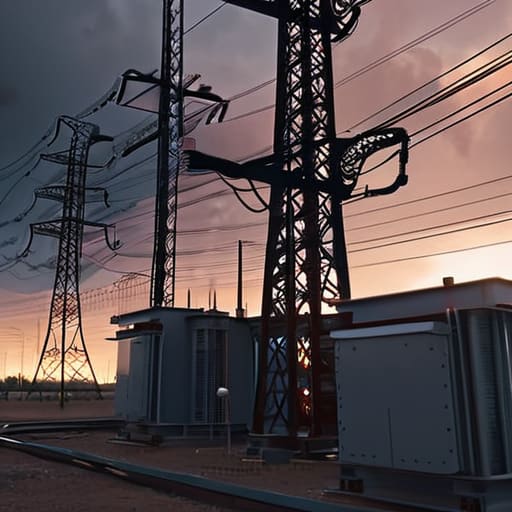
To understand why we resort to these measures, we have to look at the physics of the grid itself. A power system is essentially a giant, high-stakes balancing act between supply and demand that must happen in near-real-time. When demand outstrips generation, the frequency of the entire system begins to drop. If that frequency dips below a certain threshold, the mechanical components of turbines and transformers can suffer physical damage, leading to a cascading failure. This is where grid stability management moves from a theoretical exercise to a frantic race against physics. We aren’t just trying to keep the lights on; we are trying to prevent the entire system from tearing itself apart.
The real difficulty lies in the fact that most current infrastructure was built for a world where supply was predictable and demand was a passive byproduct. Today, with the rise of intermittent renewables, we are forced to use more aggressive load balancing techniques to maintain equilibrium. We often talk about “managing the load” as if it were a simple volume knob, but it is more like trying to stabilize a spinning plate on a moving train. If we fail to shed enough load quickly enough, the resulting imbalance can trigger protective relays that shut down entire regions, turning a manageable shortage into a catastrophic blackout.
Preventing Electrical System Overload via Controlled Disconnection
When we talk about preventing electrical system overload, we aren’t just talking about a safety valve; we are talking about managing a physical system that has almost zero tolerance for error. If the frequency of the grid drops below a certain threshold because demand outstrips supply, the mechanical components—the massive, spinning turbines in power plants—can physically sustain damage. To prevent this, operators use controlled disconnection as a desperate but necessary brake. It is a blunt instrument, but it is often the only way to ensure critical infrastructure protection for the hospitals and water treatment plants that cannot afford a total system collapse.
The challenge lies in the precision of the disconnect. If you cut too little, the entire grid might trip, leading to a cascading blackout that takes days, not hours, to repair. If you cut too much, you trigger unnecessary economic friction. This is where modern load balancing techniques come into play, attempting to move away from the “all-or-nothing” approach of the past. We are trying to transition toward more surgical interventions, but even the most sophisticated automated systems must still grapple with the reality that physics does not care about your optimization algorithms when a transformer is nearing its thermal limit.
Beyond the Switch: Five Realities of Managing a Shrinking Grid
- Prioritize critical infrastructure over economic throughput. When the frequency drops, you don’t just cut power randomly; you protect the hospitals and water treatment plants first. It sounds obvious, but the engineering challenge is defining those boundaries before the system hits a critical state, because once the cascade begins, you lose the luxury of choice.
- Implement granular demand response rather than blunt disconnection. The most sophisticated strategies move away from “all or nothing” blackouts toward incentivized, sub-sector reductions. If you can convince a factory to throttle its heavy machinery by 20% through a smart contract or a direct signal, you avoid the massive social and mechanical cost of a total shutdown.
- Account for the “reconnection shock” in your recovery planning. One mistake I see in high-level summaries is ignoring what happens when you try to bring the load back online. If you flip the switch on too many sectors at once, the sudden surge in demand can trip the very protections you just implemented, sending you right back into a blackout loop.
- Integrate distributed energy resources (DERs) as a buffer, not just a variable. We often treat solar and wind as unpredictable nuisances, but if your shedding strategy includes managing the discharge of local battery storage, you can smooth out the ramps. However, this only works if your control loops are fast enough to handle the volatility of those assets.
- Use predictive modeling that respects the uncertainty of human behavior. A shedding algorithm that assumes a flat demand curve will fail the moment a heatwave hits or a major event begins. You need to build models that account for the “error bars” in consumer usage, because the most dangerous moment for a grid is when your mathematical model of the load diverges from the physical reality on the ground.
The Reality of the Balancing Act
Load shedding is a desperate corrective measure for frequency instability, not a primary management tool; it is the physical manifestation of the gap between real-time generation and demand that automated governors couldn’t bridge fast enough.
Effective disconnection relies on the precision of the “shed” schedule, because if the sequence is too slow, the frequency drop triggers a cascading failure that renders the controlled disconnection moot.
We have to accept that load shedding is a zero-sum game where the preservation of the entire system’s integrity is bought directly through the localized economic and social disruption of the disconnected sectors.
The Cost of Equilibrium
We have to stop looking at load shedding as a simple failure of supply and start seeing it as a desperate, highly technical attempt to maintain systemic integrity. We’ve traced how it moves from a mathematical necessity—balancing frequency and voltage in real-time—to the brutal reality of controlled disconnection. Whether we are using rotating outages to prevent a total cascading collapse or employing sophisticated demand response to nudge consumer behavior, the goal remains the same: protecting the hardware. However, we cannot ignore the trade-off; every time we shed load to save the grid, we are essentially choosing which parts of our economy and social fabric will suffer to ensure the entire machine doesn’t tear itself apart.
Moving forward, the challenge isn’t just about building bigger batteries or more efficient turbines; it is about designing smarter, more granular control loops. As we integrate more volatile, distributed energy resources into the mix, our ability to manage these imbalances will determine whether our grids are resilient or merely brittle. I find a strange sort of beauty in this complexity—the idea that we can use precise, algorithmic interventions to steer a massive, chaotic physical system back toward stability. If we focus on understanding the underlying mechanics of these shifts rather than just reacting to the darkness, we might actually build a system that is robust enough to handle the chaos of the future.
